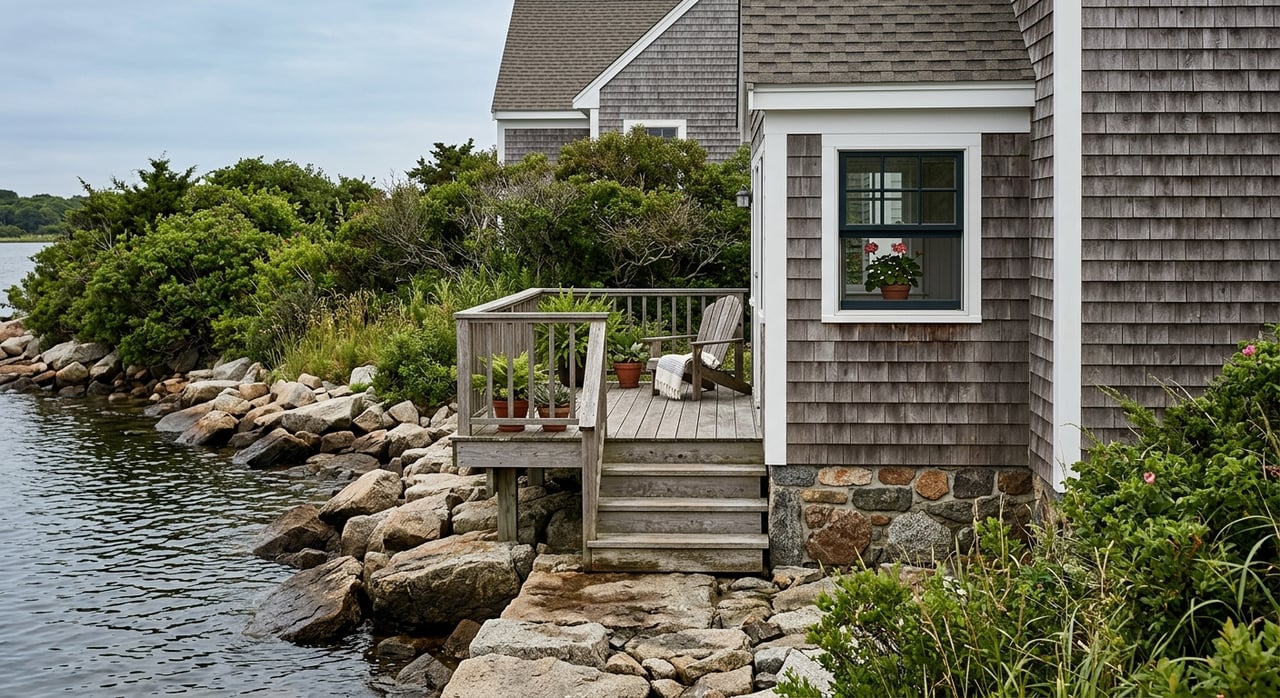
Buying a waterfront home in Yarmouth can feel like stepping into a classic Maine dream. But before you fall for the view, it helps to understand that waterfront ownership here comes with a different set of rules, risks, and day-to-day realities than many inland homes. If you are considering a purchase on the Royal River, Cousins River, or another shoreline area in town, this guide will help you ask better questions and make a more confident decision. Let’s dive in.
Yarmouth waterfront is not one-size-fits-all
A waterfront home in Yarmouth is not always a quiet, private stretch of shoreline with the same features from lot to lot. The town’s waterfront includes residential areas, marinas, public access points, municipal harbor facilities, and water-dependent commercial activity.
That mix matters when you are deciding whether a property fits your lifestyle. A beautiful setting may also come with nearby boat traffic, shared access patterns, moorings, parking activity, or marine-related noise depending on the location.
The town’s 2024 comprehensive plan notes that the upper Royal River estuary includes three marinas and the Town Landing, and that high-tide flooding occurs there. It also identifies the Cousins River area as the town’s last real working waterfront, which can shape how a property feels and functions day to day.
Shoreland zoning can shape what you can do
For many buyers, the biggest surprise is not the home itself. It is what the local rules allow, restrict, or require after closing.
Maine’s Mandatory Shoreland Zoning Act requires municipal shoreland zoning within 250 feet of tidal waters, coastal wetlands, and certain other water bodies. In Yarmouth, the Shoreland Overlay District applies in that area and also applies to structures on, over, or abutting docks, wharves, piers, and similar features.
That means a home’s lot, landscaping, future addition plans, and even small exterior projects may be affected by shoreland rules. If you are buying with renovation goals in mind, this is one of the first items to review carefully.
Setbacks may be tighter than expected
Yarmouth has property-specific controls that can be more restrictive than the state minimum. The zoning ordinance sets a 100-foot setback for principal structures along the non-tidal portions of the Royal River, Cousins River, and Pratt’s Brook.
The town also requires setbacks from the top of certain coastal bluffs identified by the Maine Geological Survey as highly unstable or unstable. If a home sits near a bluff or elevated shoreline, that condition can directly affect future expansion, site work, and long-term planning.
Lot clearing has real limits
Many waterfront buyers imagine opening up the view, widening a driveway, or making room for outdoor improvements. In Yarmouth’s shoreland zone, cleared openings are capped at 25 percent of the lot area or 10,000 square feet, whichever is greater.
Selective cutting of larger trees is also limited over a 10-year period. In practice, that can affect landscaping choices, addition plans, and how much control you have over the visual relationship between the house and the water.
Docks, floats, and shoreline access need verification
You should never assume an existing dock, float, or pier is automatically simple to keep, expand, or replace. In Yarmouth, these structures are regulated and cannot be treated as a given just because they are already there.
The ordinance generally allows no more than one pier, dock, wharf, or similar structure per lot below the normal high-water line. It also limits the size of private access structures, and temporary non-commercial piers or docks in non-tidal waters generally may not exceed six feet in width.
Some waterfront areas are sensitive enough that environmental impact analysis may also be required. So if direct water access is central to your purchase, you will want to confirm the deed, survey, permit history, and any state or town approvals tied to the existing improvements.
Flood risk deserves close attention
Waterfront buyers often focus on views first and flood exposure second. In Yarmouth, that order should be reversed during your due diligence period.
Yarmouth participates in the National Flood Insurance Program, and FEMA’s current effective map date for the town is June 20, 2024. A property’s flood zone, elevation details, and water-intrusion history can affect insurance costs, lender requirements, and your comfort level with long-term ownership.
Homeowners insurance is not the same as flood insurance
This is an important distinction. The Maine Bureau of Insurance and Maine Emergency Management Agency both state that standard homeowners policies do not cover flood damage.
Flood insurance may be available through the NFIP and from insurers that participate in the program. It may also be required by a lender for many properties in a Special Flood Hazard Area, especially when the mortgage is government-backed.
Lower-risk does not mean no risk
Even if a property is not in the highest-risk flood zone, that does not mean flooding is off the table. Maine Emergency Management Agency notes that flooding can happen anywhere, and a meaningful share of claims come from areas not considered high risk.
For buyers, the practical takeaway is simple. Review the map, but do not stop there. Ask about past flooding, tidal impacts, drainage performance, and water intrusion in basements or crawl spaces.
Maintenance is a major part of waterfront ownership
A Yarmouth waterfront home may require more ongoing attention than a comparable inland property. The exterior systems, site conditions, and shoreline itself often tell a more important story than finishes inside the house.
Maine authorities note that coastal erosion is ongoing in many areas, that unstable bluffs can lose ground over time, and that sea level rise is expected to make coastal flooding more frequent. Maine Emergency Management Agency says the Maine Climate Council recommends planning for 1.5 feet of sea level rise by 2050 and 4 feet by 2100.
These are not abstract issues for a buyer. They can influence how you think about drainage, landscaping, shoreline stabilization, and long-term improvement costs.
Look beyond the interior inspection
A polished kitchen or updated baths should not distract from bigger site questions. On a waterfront purchase, it is wise to examine roof condition, exterior drainage, bluff stability, vegetative buffers, and the history of any shoreline armor or stabilization work.
The septic system also deserves close review. Depending on the property and any future plans, Yarmouth’s ordinance can require soils reports prepared by state-certified professionals for certain uses involving subsurface waste disposal or more intensive development.
Expect more site-related rules
Yarmouth’s code reflects the realities of shoreline ownership. Land-disturbing work may require erosion and sediment control plans, temporary stabilization of exposed ground, drainage designed for a 25-year storm event or greater, and revegetation plans.
For some shoreline stabilization work, professional involvement may also be required. That is why waterfront due diligence should be broader and more specialized than a standard home purchase.
A smart due diligence checklist for buyers
If you are serious about buying a Yarmouth waterfront home, your review should go beyond price, layout, and finish level. A property-specific checklist can help you avoid expensive surprises.
Here are some of the most important items to verify:
- Flood zone designation
- Elevation information
- Prior flood, tidal, or water-intrusion history
- Deed and survey details
- Easements or access rights
- Permit history for docks, shoreline work, or other waterfront improvements
- Septic condition and any available records
- Site drainage performance
- Whether existing waterfront improvements were approved by the town or state
Because these properties can involve bluff conditions, shoreline rules, and improvement limits, it is wise to work with local inspectors, insurers, surveyors, and attorneys who understand coastal property in Yarmouth.
Why local guidance matters in Yarmouth
Two waterfront homes in the same town can come with very different constraints and opportunities. One lot may offer easier access and fewer site issues, while another may involve tighter setbacks, flood concerns, marine activity nearby, or questions about historic improvements.
That is where detailed local guidance becomes valuable. A thoughtful buying strategy is not just about finding the right house. It is about understanding the property’s long-term usability, carrying costs, and fit for the way you want to live in Maine.
If you are weighing a Yarmouth waterfront purchase, a careful, private advisory process can help you move with more clarity from the first showing through inspections, permits, and closing. For tailored guidance on southern Maine waterfront opportunities, connect with Elise Kiely.
FAQs
What should you know about shoreland zoning for a Yarmouth waterfront home?
- Yarmouth waterfront properties may fall within the Shoreland Overlay District, which can affect setbacks, clearing, additions, and certain site improvements.
What should you verify about an existing dock at a Yarmouth waterfront property?
- You should confirm the deed, survey, permit history, and any town or state approvals because dock size, location, and the number of structures allowed per lot are regulated.
What should you know about flood insurance for a Yarmouth waterfront purchase?
- Standard homeowners insurance does not cover flood damage, and flood coverage may be required by your lender depending on the property’s flood zone and loan type.
What site conditions matter most when buying a Yarmouth waterfront home?
- Key items include drainage, flood history, bluff stability, shoreline stabilization, vegetative buffers, roof condition, and septic performance.
What makes one Yarmouth waterfront lot different from another?
- Setbacks, flood exposure, bluff conditions, nearby marina or working waterfront activity, and permitted shoreline improvements can vary significantly from parcel to parcel.