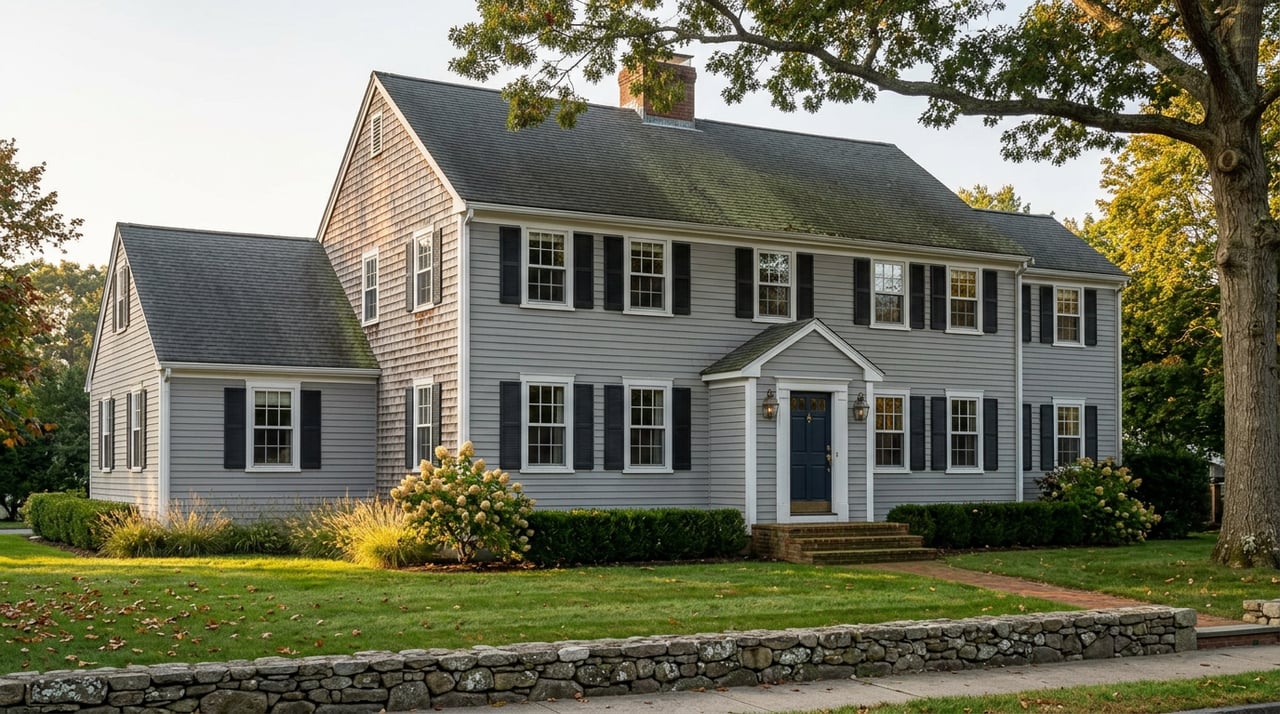
Picture the inspector's flashlight sweeping across a breaker panel in a West End three-decker, or crossing a stretch of cloth-wrapped wire running through the attic joists of a Munjoy Hill cape. Everyone in the room reads the moment the same way. Someone writes "electrical" on the report, someone else starts pricing a rewire, and the assumption settles in that this is a contractor problem with a contractor solution.
It rarely is. In Portland's pre-1940 housing stock, the wiring itself is almost never what stalls a closing. What stalls it is the insurance application, and Maine handles a declined application differently than most of the country does, because Home Insurance Alternatives reports that Maine has no state-run insurer of last resort to catch what the private market turns down.
Where the Old Wiring Actually Lives
Knob-and-tube wiring was the standard residential system from the 1880s through the 1930s, which puts it squarely inside Portland's oldest neighborhoods. A Portland electrician who works Cumberland County regularly notes that if a home was built before 1940, there is a real chance it still carries some of the original system behind the walls. That band of construction runs through the peninsula, the West End, and Munjoy Hill, where Victorian and craftsman homes were framed decades before anyone was wiring for refrigerators, heat pumps, or a bank of kitchen appliances running at once.
A second, separate hazard shows up a generation later. Federal Pacific Stab-Lok and Zinsco panels are known safety hazards that turn up across Portland's housing stock, and they concentrate less in the pre-1940 peninsula and more in the mid-century homes of Deering and Woodfords. A Portland-based residential electrician who works across the city, from the historic Victorians on the peninsula to the multi-family buildings in East Bayside and Munjoy Hill to the newer construction in North Deering and Stroudwater, points to both problems showing up in the same inspection: a home with active knob-and-tube feeding part of the circuit load, and a panel with a brand name that underwriters already know to flag.
Age brings a third pattern that has nothing to do with wiring at all. A firm that inspects homes across greater Portland notes that many houses in Deering and Munjoy Hill sit on stone or brick foundations, and that the city's high water table combined with heavy snowmelt leaves those basements prone to efflorescence and hydrostatic pressure. None of that shows up on a listing sheet. It shows up in the inspection report, right next to the electrical findings, on the same afternoon.
The Insurance Step Nobody Budgets For
Here is the sequence that actually determines whether a Portland closing stays on schedule. The home goes under contract. The inspection flags active knob-and-tube, a Federal Pacific or Zinsco panel, or both. The buyer's insurance application goes in, and a standard carrier either declines to write a new policy or conditions it on the electrical work being finished within a set window.
A purchase and sale agreement sets one clock. An insurance underwriter, once a hazard is on the file, sets a different one, and the two rarely run at the same speed.
| Stage | What happens | Who is waiting |
|---|---|---|
| Inspection | Active knob-and-tube or a flagged panel brand is documented | Buyer, seller, both agents |
| Insurance application | Standard carrier declines or conditions the policy | Buyer, lender |
| Remediation | Licensed electrician assesses scope, work is scheduled | Buyer, seller, closing date |
| Proof of coverage | Insurer confirms the fix, issues or reinstates the policy | Lender, title company |
A home that sailed through inspection can still stall here, and the person most surprised is usually the one who assumed the wiring itself was the finish line.
The Fallback That Isn't There
Most states with a hard-to-insure housing stock built a pressure valve for exactly this moment: a FAIR Plan, short for Fair Access to Insurance Requirements, which acts as an insurer of last resort when the private market says no. Maine never built one. Insurance specialists who track this by state point to the reasons directly: Maine's spread-out communities keep concentrated catastrophe risk low, the state does not face the hurricane or wildfire exposure that forces other states into a shared-risk plan, and the private market here has stayed competitive enough that regulators never saw the need.
That is good news for the market generally and a real complication for one specific buyer: the one whose knob-and-tube or Federal Pacific panel just got declined by a standard carrier three weeks before closing.
This is the piece that rarely makes it into a general home-buying guide, because most of those guides are written against a national backdrop where a FAIR Plan is assumed to exist somewhere in the background. In Portland, it does not, and that changes how much slack a buyer actually has if the first insurance quote comes back as a decline rather than a condition.
What Maine Law Actually Requires
Once a policy is in force, Maine gives homeowners more protection than the phrase "insurance non-renewal" suggests. According to the Maine Bureau of Insurance, during the first 90 days of a new policy, or 120 days for a seasonal or secondary home, an insurer can cancel for almost any reason. After that window closes, the rules tighten considerably.
An insurer "must provide an explicit reason" and cannot simply cite "underwriting reasons or loss record."
That standard comes directly from Maine's insurance regulator, and it matters for anyone who owns one of these older homes long-term, not just buyers at the closing table. If a carrier's periodic inspection turns up active knob-and-tube years into ownership, the homeowner is entitled to know the actual condition being cited, not a vague reference to risk. Maine law also gives the insured 30 days after a cancellation or non-renewal notice to request a hearing before the Superintendent of Insurance. That right does not stop a legitimate hazard from needing to be fixed, but it does mean the insurer has to name the hazard, not hide behind a form letter.
The Paper Trail That Actually Clears It
The fix that satisfies an underwriter looks less like a repair invoice and more like a documentation packet. A written assessment from a licensed electrician comes first, laying out exactly which circuits are original knob-and-tube and which have already been updated, since many older Portland homes carry a mix of both from partial rewiring decades ago. From there, the sequence generally runs in order:
- Get the written scope and quote before applying for insurance, not after a decline
- Complete the electrical work
- Get the final inspection closed and the card in hand
- Send the closed permit and contractor documentation to the underwriter as proof
That last step is the one buyers and sellers most often skip, assuming the finished work speaks for itself. Underwriters do not see finished work. They see paperwork, and the homeowner who hands over a closed permit and a licensed contractor's letter is the one who gets a policy reinstated or bound on schedule instead of waiting on a second round of questions.
For a seller sitting on one of these homes, that same documentation is worth assembling before a buyer's inspector ever walks through the door. A closed electrical permit from a prior rewire, or a written assessment showing the remaining knob-and-tube is confined to a single attic run, gives a buyer's insurer something concrete to underwrite against instead of a blank page.
Frequently Asked Questions
Does every home with knob-and-tube wiring need a full rewire before closing? Not necessarily. Many older Portland homes carry a mix of original knob-and-tube and later rewiring from partial updates done over the decades. A licensed electrician's circuit-by-circuit assessment determines what is actually active and what already meets modern standards, which is often less than the whole house.
If the seller already has an active policy, does that protect the buyer? No. A buyer applies for a new policy in their own name, and that application goes through underwriting independent of whatever the seller had in place, even if the seller never had a claim or a non-renewal notice.
Are Federal Pacific and Zinsco panels the same issue as knob-and-tube wiring? They are separate hazards that happen to concentrate in overlapping parts of Portland's housing stock. Knob-and-tube is a wiring-era problem tied to pre-1940 construction. Federal Pacific and Zinsco are panel-brand problems tied more to postwar and mid-century homes in neighborhoods like Deering and Woodfords. A home can have one, the other, or both.
Portland's older neighborhoods carry a version of charm that newer construction cannot replicate, and that is exactly why the insurance conversation deserves to happen early rather than at the eleventh hour. If you are weighing an offer on a peninsula Victorian, a Munjoy Hill cape, or a mid-century home in Deering, Elise Kiely can walk through what a specific property's electrical history is likely to mean for your closing timeline, well before the inspection clock starts running. Request a private consultation to talk through the details before you write the offer.
This article is general information, not legal, tax or financial advice. Consult a qualified professional about your situation.