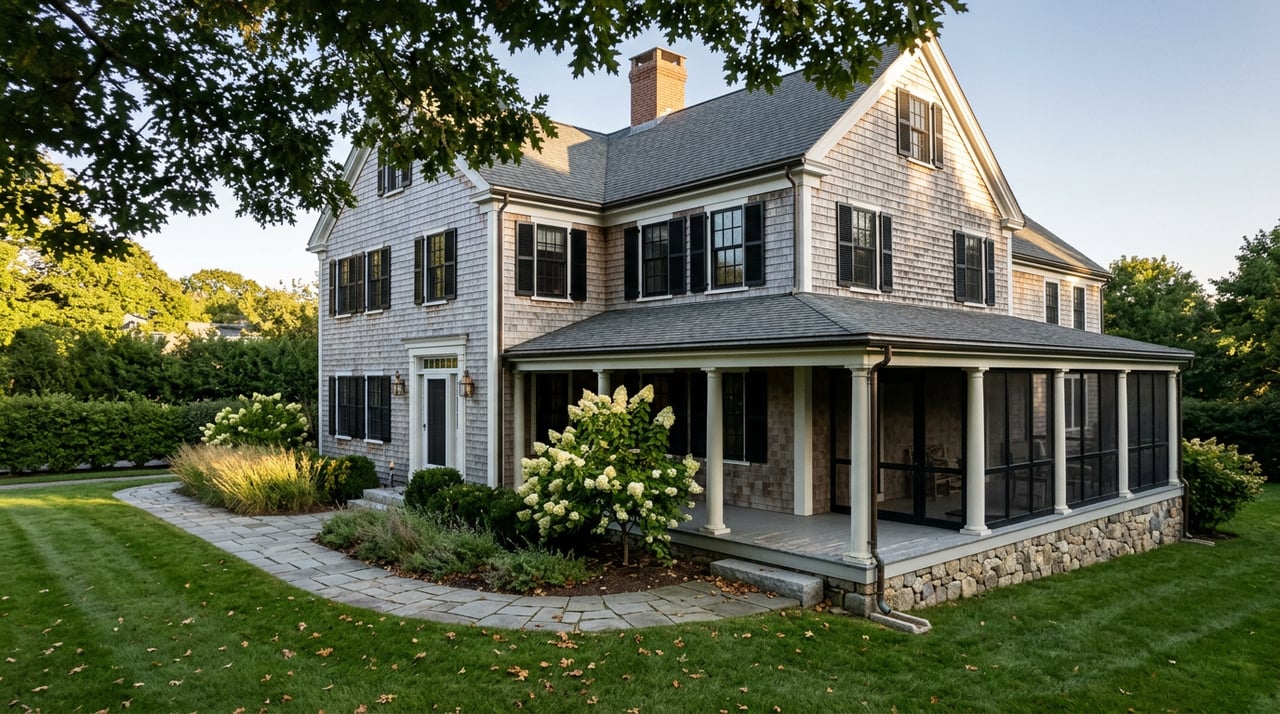
Wondering if you can sell your Falmouth home without putting it everywhere online? The short answer is yes, but discreet selling is not the same as skipping strategy. If privacy matters to you, this guide will help you understand how quiet listing options work in Maine, what you may gain, what you may give up, and how to decide whether a private sale fits your goals. Let’s dive in.
Why discreet selling appeals in Falmouth
Falmouth is not a one-size-fits-all market. It is a coastal town just north of Portland, and town information highlights its extensive open space, conservation land, and strong sense of setting, all of which help explain why privacy and lifestyle often matter to buyers and sellers here. In a place where homes can offer space, mature landscapes, and a more tucked-away feel, many owners naturally want a sale process that feels equally controlled.
The housing profile also supports that conversation. According to U.S. Census QuickFacts for Falmouth, the town has a high owner-occupied housing rate, a median owner-occupied home value of $767,500, and a median household income of $150,919. Those figures point to a stable, high-value market where some sellers may reasonably prefer a more private approach.
At the same time, Falmouth is still a market where pricing and exposure matter. Current market snapshots vary by source, but they all show relatively high values and limited inventory, with Redfin reporting a March 2026 median sale price of $950,000 and broader Maine economic data showing inventory remains well below 2019 levels. That mix can make discreet selling attractive, but it also means a smaller audience needs to be handled with care.
What discreet selling actually means
Many homeowners use the term “private listing” loosely, but in practice there are a few different paths. The most important point is that each option has different rules, levels of exposure, and tradeoffs.
According to the National Association of Realtors consumer guide on alternative listing options, office exclusive exempt listings are not shared on the MLS or publicly marketed. Delayed marketing exempt listings, by contrast, may be entered into the MLS while being withheld from IDX and syndication for a limited period, depending on local rules.
In Maine, the details matter even more. Under Maine Listings rules, required residential listings generally must be submitted within five business days if there is no public marketing. If a property is publicly marketed, it must be submitted within one business day. That means true discretion depends on following very specific guidelines.
Office exclusive listings
An office exclusive is the closest thing to a truly private listing path. In Maine Listings, it applies when the seller asks not to disseminate the listing and signs a Waiver of MLS Benefits form.
This route can reduce traffic through your home, limit public attention, and keep details out of broad online circulation. For some Falmouth sellers, that level of control is the main goal.
Delayed or limited public marketing
Some sellers want a middle ground. They may be comfortable listing the property but prefer to delay broader public exposure for a short time.
NAR distinguishes that concept from office exclusive marketing, but the local structure still controls what is allowed. The exact options available depend on Maine Listings rules and the listing strategy you choose with your advisor.
Coming Soon is not fully private
A common misunderstanding is that Coming Soon means off-market. In Maine Listings, Coming Soon / No Show can last up to 10 business days, but it still appears in IDX, VOW, MaineListings.com, and third-party syndication.
In other words, it may limit showings for a short period, but it does not make your listing invisible. If your goal is true discretion, this distinction is important.
The real benefits of a discreet sale
For the right seller, a quiet launch can be a smart choice. The appeal is usually less about secrecy and more about control, timing, and fit.
NAR notes that alternative listing options often serve sellers who want to limit exposure for privacy or other personal reasons. In a market like Falmouth, that can be especially relevant if you value a low-profile process or want to manage access more carefully.
Here are some of the most practical advantages:
- Fewer showings and less disruption to daily life
- More control over who enters the home
- Less neighborhood attention and online visibility
- A more curated buyer pool
- Flexibility to test strategy before a broader launch
For higher-end properties, discreet exposure can also align with how some buyers prefer to search. In smaller upper-tier markets, relationships, timing, and trusted networks can play a larger role than they do in more price-sensitive segments.
The tradeoffs you should understand
Privacy has value, but it comes with a cost. The biggest tradeoff is reach.
As NAR explains, the MLS helps sellers reach the largest pool of prospective buyers, and broad exposure can be important when your goal is to create stronger competition. If you narrow the audience too much, you may limit the number of qualified buyers who ever know your home is available.
That matters in Falmouth because the market is strong, but not perfectly predictable. Research sources do not fully agree on the market’s current balance, with Redfin describing it as very competitive while Realtor.com has labeled it a buyer’s market in a recent snapshot. The key takeaway is simple: discreet selling is a strategy choice, not a guaranteed path to a higher price.
When a private sale may make sense
A discreet approach may be a strong fit if your priorities are clear and your property is likely to resonate with a targeted audience. This is often most plausible in Falmouth’s upper tier, where the buyer pool can be smaller, more financially qualified, and more relationship-driven.
You may want to consider a private or highly targeted strategy if:
- Privacy is more important to you than maximum visibility
- Your home is likely to appeal to a specific buyer profile
- You want to limit disruption during the selling process
- You are open to a measured launch rather than an immediate public push
- Your pricing and presentation are strong enough to persuade a smaller audience
If, however, your main goal is the widest possible exposure or the strongest chance of creating broad competition, a full public launch may be the better fit.
Preparation matters even more off-market
One of the biggest mistakes sellers make is assuming a quiet listing can be less polished. In reality, the opposite is usually true.
When fewer buyers see your home, each showing carries more weight. That means pricing discipline, condition, staging, photography, and overall presentation matter just as much, if not more, than they would in a public launch.
For many Falmouth properties, especially in the premium market, a discreet strategy works best when the home is turnkey and easy to understand. Buyers need enough confidence, quickly, to act without the reinforcement of a broad public rollout.
A strong preparation plan often includes:
- Clear pricing based on current market conditions
- Thoughtful staging and decluttering
- Professional photography
- Pre-listing repairs or maintenance
- Pre-inspection planning when appropriate
- A clean disclosure package ready for serious buyers
Maine rules you need to know
If you are considering a discreet sale, local rules are not just a technical detail. They shape what is possible.
Under Maine Listings rules, public marketing includes yard signs, flyers, public-facing websites, brokerage IDX and VOW displays, email blasts, multi-brokerage sharing networks, and public apps. If an exempt listing is later publicly marketed, it must be distributed within one business day.
That means your strategy needs to be defined clearly from the start. A seller who wants privacy should understand exactly what can and cannot happen before the listing changes status.
You should also know that Maine residential sellers generally must provide a property disclosure statement under state law, unless an exemption applies. The disclosure covers important issues such as water supply, heating, waste disposal, hazardous materials, known defects, access, flood hazard, and shoreland zoning matters. It must be delivered no later than when the buyer makes an offer.
Even in Coming Soon / No Show status, Maine Listings rules still require that any agreement of sale received be presented to the seller. Quiet marketing does not remove your legal or procedural responsibilities.
Pricing and net proceeds in Falmouth
In a high-value market, pricing is not just about attracting buyers. It is also about protecting your net proceeds.
For Falmouth sellers with substantial equity, transfer tax planning is part of the conversation. According to the Maine Revenue Services transfer tax guidance, the tax is $2.20 for each $500 of value, with an additional $3.80 per $500 on the portion above $1 million for transfers on or after November 1, 2025.
That does not mean discreet selling is less effective. It simply means you should evaluate pricing, timing, and expected net carefully, especially if you are balancing privacy against broad-market competition.
Choosing the right strategy for your goals
The best discreet-sale plan is usually not the most secretive one. It is the one that matches your priorities, your home, and the realities of the Falmouth market.
If your property is likely to benefit from curated outreach, relationship-driven exposure, and premium presentation, a private or limited-release approach may serve you well. If your home would benefit from reaching the widest possible audience quickly, public exposure may offer a stronger path.
What matters most is having a clear framework before you go live. That includes understanding Maine’s listing rules, preparing the home to a high standard, pricing it credibly, and choosing a launch plan that supports your goals from day one.
If you are weighing whether a discreet sale is the right fit for your Falmouth home, Elise Kiely can help you evaluate your options with a strategic, private consultation.
FAQs
What does discreetly selling a home in Falmouth usually mean?
- It usually means using a private or limited-exposure listing strategy, such as an office exclusive or a carefully timed launch, rather than immediately marketing the home everywhere online.
Is a Coming Soon listing in Maine the same as a private listing?
- No. Under Maine Listings rules, Coming Soon / No Show still appears in IDX, VOW, MaineListings.com, and third-party syndication, so it is not fully private.
Can a Falmouth seller avoid the MLS completely?
- In some cases, yes, through an office exclusive listing supported by a seller-signed waiver of MLS benefits, but the strategy must comply with Maine Listings rules.
Does discreet selling help a Falmouth home sell for more money?
- Not necessarily. A discreet strategy can offer more privacy and control, but it may also reduce buyer reach, so it should be treated as a strategy choice rather than a guaranteed pricing advantage.
Do Maine home sellers still need to provide disclosures in a private sale?
- Yes, unless a legal exemption applies. Maine law generally requires a residential property disclosure statement no later than when the buyer makes an offer.
When is discreet selling most likely to work in Falmouth?
- It is often most effective when the home is well prepared, priced credibly, and likely to appeal to a targeted, financially qualified buyer pool that values privacy and premium presentation.